Key points
- Negotiate MOQ per order rather than per part number for a first purchase — a mixed container lets you test several lines.
- Get a ship date in writing. Quoted lead time often excludes inspection, export packing and sea freight.
- Inspect a sample against critical dimensions, and photograph the sealed container before unpacking.
- Choose a supplier whose coverage lets you consolidate a mixed order into one shipment.
Minimum Order Quantity: What's Reasonable
MOQ is where most first conversations stall. A supplier quoting 500 pieces on an untested part is asking you to carry all the risk; a supplier quoting 5 is probably not manufacturing at scale.
What to establish:
- Is the MOQ per part number or per order? A per-order MOQ across a mixed container is far more useful than a per-SKU one, especially on a first order when you want to test several lines.
- Is it negotiable on repeat orders? Most are. Ask what the second order looks like before you commit to the first.
- Does it apply to slow-moving lines? Fasteners, seals and gaskets should not carry the same MOQ as a crankshaft.
Lead Time: What to Confirm Before You Commit
Quoted lead time and actual lead time diverge for predictable reasons. Pin down which of these the quote refers to:
| Stage | What to ask |
|---|---|
| Production | Is the part in stock, or made to order? Made-to-order items often mean 30–45 days before anything ships. |
| Inspection | Is quality inspection included in the quoted time, or does it start after? |
| Packing | Export packing for heavy parts adds days. Confirm it is counted. |
| Shipping | Sea freight from China to Europe runs roughly 30–40 days port to port. This is usually not in the quoted lead time. |
Ask for the ship date in writing, not the lead time in days. "45 days" means different things to different suppliers; "ships by 14 November" does not.
Inspection: What to Check on Arrival
You cannot inspect every piece in a wholesale shipment. What you can do is inspect enough to know whether the batch is consistent — and check the items where a defect is expensive to discover later.
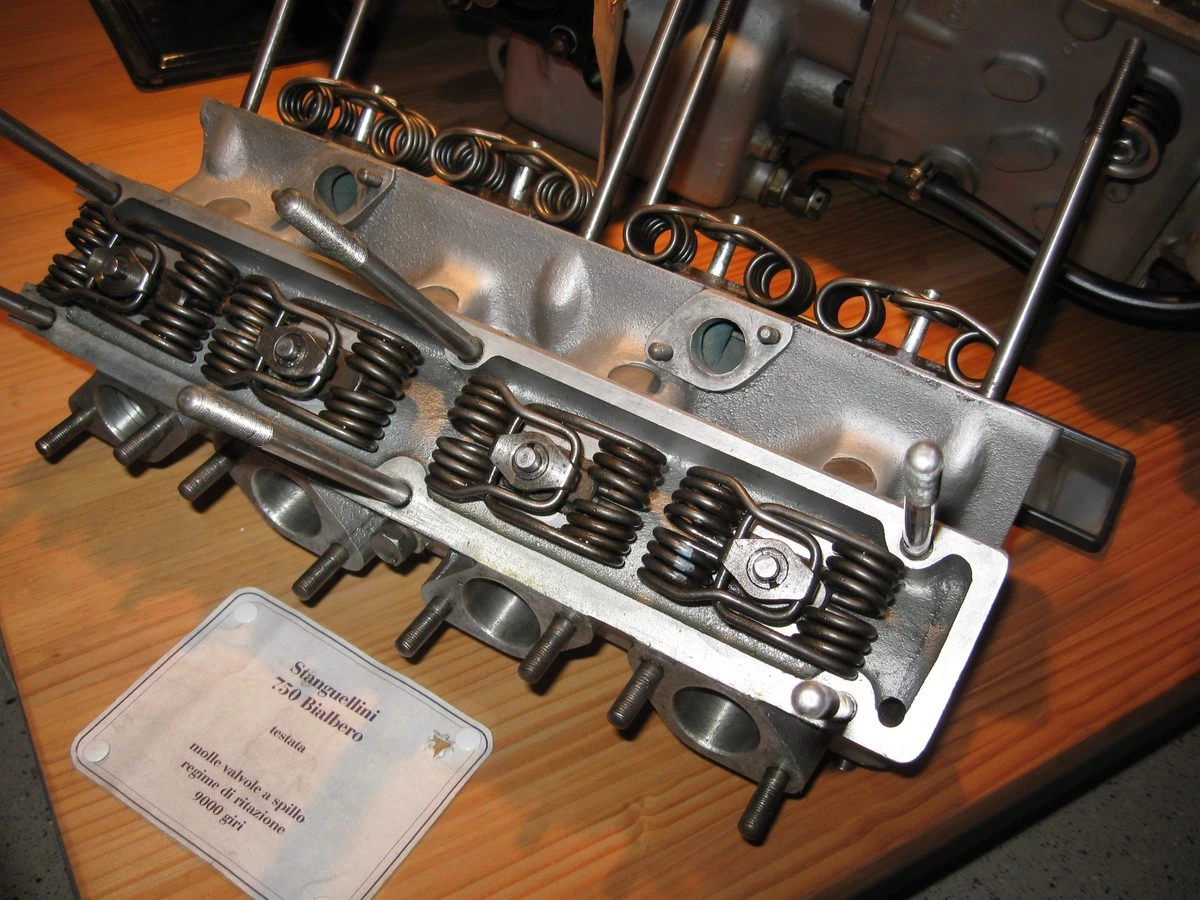 A batch of crankshaft bearings laid out for inspection. Bearing shells are a good sample item — dimensional variation between them shows up quickly and indicates how the rest of the batch was made.
| Check | How | Why it matters |
|---|---|---|
| Quantity | Count against the packing list before signing | Short shipments are hard to claim after the container is released |
| Part number match | Spot-check 10% against the order | Catches mis-picks before they reach your customers |
| Critical dimensions | Measure on a sample — journal diameters, pin bores, flange thickness | Dimensional drift is the most common manufacturing defect |
| Surface condition | Look for rust, pitting, machining marks | Indicates packing or storage problems that will affect the whole batch |
| Packaging integrity | Check that heavy parts have not shifted and damaged neighbours | Shipping damage often only shows on the inner units |
Warranty: What Good Terms Look Like
A warranty that only covers manufacturing defects, with no defined process for claiming, is not worth much. What to look for:
- A stated period — commonly 6 to 12 months for diesel engine components, sometimes expressed in operating hours for heavy equipment.
- A defined claim process — who you contact, what evidence is required, and what the response time is.
- Replacement rather than credit — for parts you are reselling, a replacement keeps your customer's machine running. A credit does not.
- Clarity on installation damage — most warranties exclude it, which is fair, but the boundary should be explicit.
Sourcing Truck and Excavator Engine Parts
Construction and haulage applications put different demands on components than on-highway use, and the parts are not always interchangeable even when the base engine is the same.
When you are a supplier of truck and excavator engine parts, two things matter more than price:
- Coverage breadth. A supplier who stocks Cummins, Isuzu, Komatsu and CAT lines lets you consolidate a mixed order into one shipment. Splitting across four vendors multiplies your freight and paperwork.
- Application knowledge. An excavator engine running in a quarry sees different duty cycles than the same engine in a highway truck. Ask whether the part is rated for the application, not just the engine model.
For heavy equipment engine components bought wholesale, request the application list alongside the cross-reference. It tells you quickly whether the supplier understands the difference.
The Short Version
Negotiate MOQ per order rather than per SKU for a first purchase. Get a ship date in writing. Inspect a sample against critical dimensions, and photograph everything before you unpack. Confirm the warranty includes a claim process and replacement parts. And choose a supplier whose coverage lets you consolidate orders rather than spreading them.
Common questions
What is a reasonable MOQ for wholesale diesel engine parts?
It depends on whether the MOQ applies per part number or per order. A per-order MOQ across a mixed container is far more useful for a first purchase, because it lets you test several lines without committing working capital to any one of them. Ask whether the MOQ is negotiable on repeat orders — most are.
How long does a wholesale diesel parts order take?
Ask for a ship date in writing rather than a lead time in days. Production, inspection and export packing are often quoted together, while sea freight of roughly 30–40 days from China to Europe is usually not included. "45 days" means different things to different suppliers; "ships by 14 November" does not.
What should I inspect when a shipment arrives?
Count against the packing list before signing, spot-check around 10% of part numbers, measure critical dimensions on a sample such as journal diameters and pin bores, and check surface condition for rust or pitting. Photograph the sealed container and the packing list before unpacking — once the shipment is broken down, the evidence for a claim is gone.
What should a warranty cover?
A stated period (commonly 6 to 12 months, or expressed in operating hours for heavy equipment), a defined claim process with a named contact and evidence requirements, and replacement rather than credit. For parts you are reselling, a replacement keeps your customer's machine running while a credit does not.
Find out more
- Complete diesel engines and assemblies — for trucks, construction equipment, generators and marine use
- About Komotashi — who we are and how we work with distributors
About this guide. Written by the Komotashi technical team from export order handling across Cummins, Caterpillar, Isuzu, Perkins, Deutz, Komatsu and Weichai platforms. Lead time figures reflect sea freight from Chinese ports and vary by destination and season.