Truck Cylinder Head: How to Match It by Engine Code
Key points
- A truck cylinder head is identified by the OE number and the casting mark on the head itself — the engine code alone is not enough, because one engine family can carry several heads.
- Bare heads are cheaper and faster when the valve train is sound; complete assemblies suit rebuilds where valves, springs and camshaft are also worn.
- Cracks between valve seats and injector sleeve leaks are the two faults that most often end a repair and start a replacement.
- Matching the head to the machine or truck model matters as much as the engine code: mounting and port layout can differ between applications.
- Send the OE number, engine code and machine model; that is enough to confirm the casting before shipping.
What identifies a truck cylinder head
Three references matter, and they are not interchangeable:
- OE number — the number in the parts book or stamped on the head. This is the only reference a supplier can quote from with confidence.
- Casting mark — the manufacturer's mark and the casting number on the side of the head. It confirms which generation of the casting you have.
- Engine code — needed as well, because emissions changes often introduced a different head on the same engine family.
In practice the OE number settles the match; the casting mark catches the cases where a previous repair fitted the wrong head. On Volvo and Mercedes truck engines it is common to find a head from a different rating on the same block, which is why the number on the head should be checked before ordering.
Bare head or complete assembly
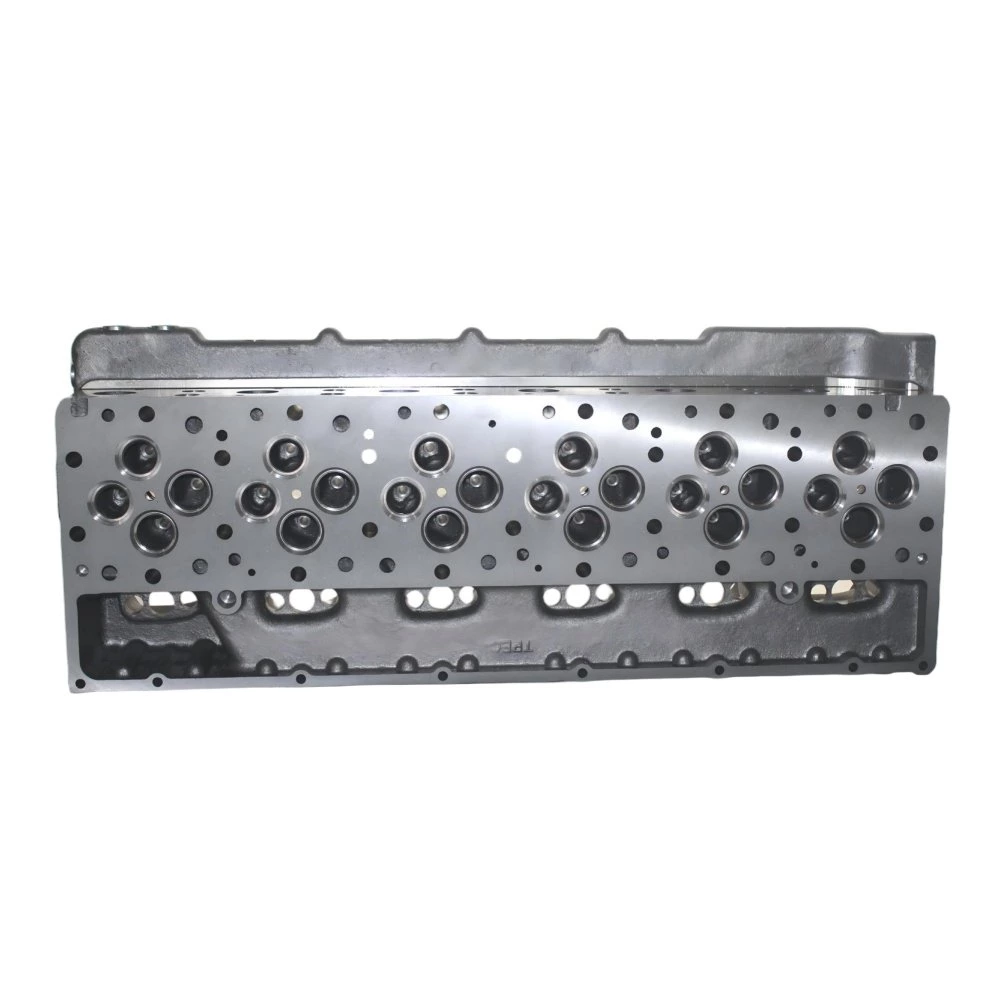
A bare head is the casting with the valve seats and guides machined, but without valves, springs or camshaft. It is the right order when the existing valve train is within specification and can be transferred.
A complete assembly arrives with the valve train fitted — valves, springs, retainers and, depending on the head, the camshaft. It removes the assembly and setting time and is the usual choice for a fleet rebuild or when the old head failed in a way that damaged the valves.
The decision usually comes down to two questions: are the old valves and springs reusable, and does the workshop have the time to set them up? If either answer is no, the complete assembly is the cheaper route once labour is counted.
Platforms we list
Our cylinder head range covers truck and industrial engines across several brands. Examples from the current catalogue:
| Engine | Head | Listing |
|---|---|---|
| Volvo D6D | Bare | Volvo D6D Cylinder Head |
| Volvo D7E | Bare | Volvo D7E Cylinder Head |
| Mercedes OM651 | Assembly | Mercedes OM651 Cylinder Head Assy |
| Mercedes OM906 | Bare | Mercedes OM906 Cylinder Head |
| Cummins 6BT | Bare | Cummins 6BT Cylinder Head |
| CAT C13 | Bare | CAT C13 Cylinder Head |
| Komatsu S6D114 | Bare | Komatsu S6D114 Cylinder Head |
| Cummins ISF2.8 | Bare (OE 5271176) | Cummins ISF2.8 Cylinder Head |
The full range, including industrial and marine applications, is on the cylinder head category page.
Faults that decide repair or replacement
- Cracks between the valve seats — usually terminal on a used head; welding is rarely economic on a production engine.
- Injector sleeve leaks — coolant or combustion gas past the sleeve. Sometimes repairable, but the seat has to be checked before the head goes back on.
- Warped deck — measured before machining; if the head has already been skimmed to the limit, it is replaced.
- Valve seat recession — new seats can be fitted, but the cost approaches a replacement on many heads.
- Camshaft journal damage in the head — if the journals are scored, the head is scrap regardless of the valves.
Overheating is the common cause behind several of these, so the cooling system should be checked at the same time — otherwise the replacement head meets the same conditions.
Inspecting the old head before you order
Before deciding on a replacement, four checks tell you whether the head is worth repairing:
- Pressure test — the only reliable way to find cracks that are not visible. A head that fails the test does not go back on the engine.
- Flatness — checked with a straight edge and feeler gauge across the deck in both directions.
- Valve seat condition — pitted or recessed seats mean new inserts, which changes the cost calculation.
- Injector sleeve seats — corrosion or a loose sleeve is a leak path that will return after the head is fitted.
If two or more of these fail, replacement is usually the economical route; if only the gasket failed, the head may only need cleaning and a light skim.
Why truck heads fail
Most truck cylinder head failures trace back to heat or to a previous repair:
- Overheating — a blocked radiator, failed thermostat or low coolant warps the deck and cracks the head between the seats.
- Incorrect torque or sequence — head bolts fitted without the specified sequence leave uneven clamping and a repeat gasket failure.
- Reused torque-to-yield bolts — the bolt has already stretched and cannot hold the specified clamp load.
- Fuel and cooling neglect — long intervals between coolant changes promote corrosion around the injector sleeves.
Fitting a new head without correcting the cause is the most common reason a truck returns with the same fault.
What to send for a quote
- The OE number and the casting mark from the old head.
- The engine code and the truck or machine model.
- Whether you need a bare head or a complete assembly.
- Quantity and whether the order is for stock or a specific repair.
FAQ
Can I fit a bare head and reuse my valves?
Yes, if the valves, springs and guides are within specification. If the head failed through overheating or valve damage, the old valve train is usually not reusable.
Do I need to machine a new head before fitting?
New and remanufactured heads are supplied ready to fit. Used heads should be checked for flatness before installation.
How do I know the head matches my engine?
Send the OE number and casting mark together with the engine code. We check the casting against both before packing.
Are remanufactured heads available?
We quote new, remanufactured and used heads separately, and the condition is stated on the quotation.
Why does the same engine have different head numbers?
Emissions updates and different ratings within one engine family can use different castings. The OE number is what identifies the right one.
Start from the cylinder head category page, or send the number from your old head and we will confirm the match.