Cylinder Head Valve and Spring Replacement: When and What to Order
Key points
- Worn valves show as compression loss, smoke and a misfire that moves between cylinders; worn springs show as valve float and a seat that never settles.
- Lapping only restores the sealing face. It cannot fix a bent stem, a worn guide or a spring that has lost tension.
- Valves and springs are matched to the head — replacing one without checking the guide and seat is a common cause of a repeat failure.
- On a rebuild, a complete head assembly is usually faster than transferring the old valve train.
- Send the head's OE number and engine code; the valve train part numbers follow from the head, not from the engine alone.
Symptoms that point to the valve train
- Compression loss on one or two cylinders — a leaking valve shows up as a low reading that does not improve with oil.
- Blue or black smoke at idle — oil past worn guides, or unburnt fuel from a valve that is not seating.
- Misfire that moves — a valve fault tends to stay with the cylinder; a misfire that jumps between cylinders is more likely fuel or electrical.
- Rattle at high rpm — valve float from weak springs, often described as the engine "running out of breath".
- Backfire through the intake — an intake valve not sealing.
None of these is conclusive on its own. A leak-down test on each cylinder, plus a visual check of the valve train once the head is off, is what confirms it.
Inspecting valves, guides and springs
With the head on the bench, four checks decide what is replaced:
- Valve face and margin — a thin margin or a pitted face means replacement; grinding a badly worn valve removes material it no longer has.
- Stem and guide clearance — a rocking valve in a worn guide will not hold a seat seal, even with new valves.
- Spring free length and squareness — springs lose tension with heat cycles; a spring that is short or leans to one side is replaced as a set.
- Seat width and runout — a wide or eccentric seat needs cutting, not lapping.
On heavy-duty heads the guides are often replaceable, so the head can be saved even when the guides are worn — but the cost of guide replacement plus seats plus valves is what usually pushes the decision towards a complete assembly.
What lapping can and cannot fix
Lapping is the hand process that matches a valve to its seat with abrasive paste. It is useful for checking contact and for a light touch-up after a valve has been removed and refitted.
It does not fix:
- a bent or worn stem;
- a recessed or eccentric seat;
- a cracked seat area;
- a spring that has lost tension.
If the seat needs cutting, it is a machine-shop operation, and the valve must be replaced if the margin is already thin. Lapping a worn valve into a worn seat gives a seal that lasts a few hundred hours, not an overhaul interval.
Bare casting or complete assembly
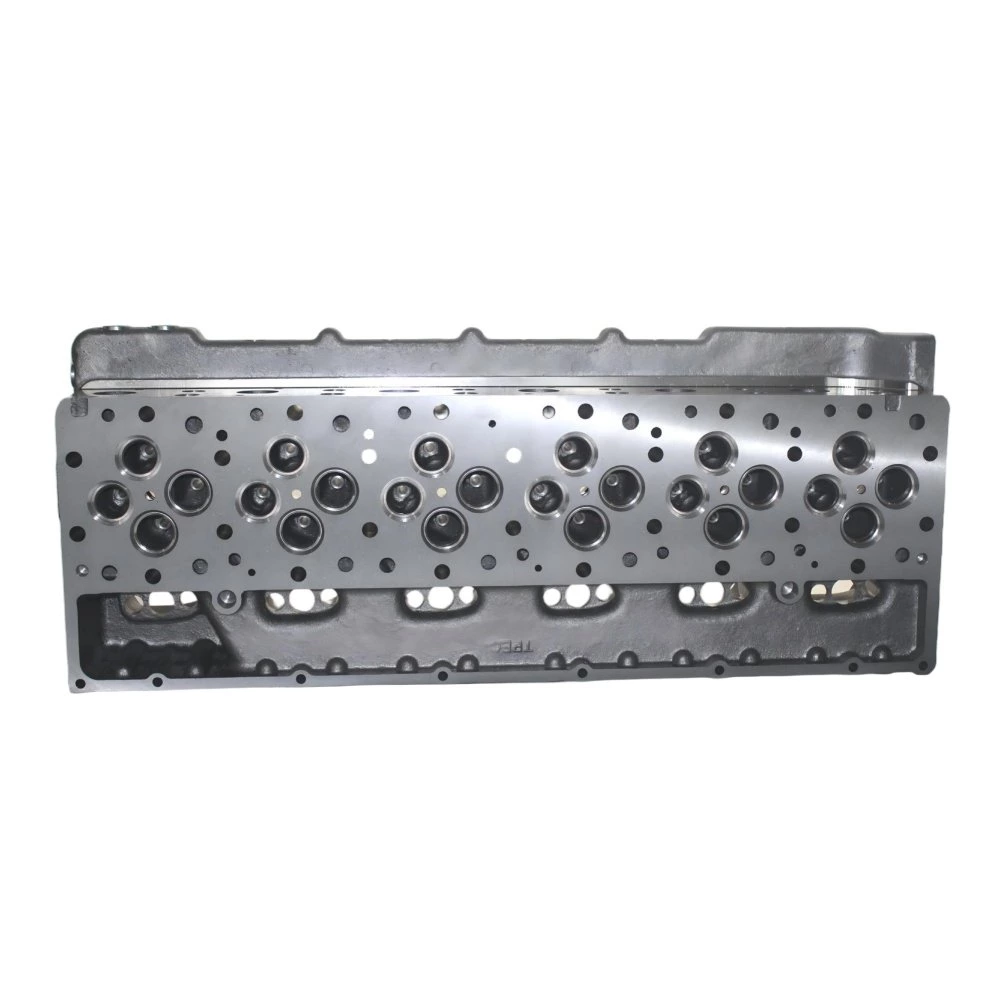
A bare head arrives without valves and springs, and the workshop transfers or renews the valve train. It suits a head that failed through a gasket or a crack while the valve train is known good.
A complete assembly arrives with valves, springs, retainers and, on some heads, the camshaft fitted and set. It removes the assembly time and the risk of mixing old and new parts.
The deciding factor is usually the state of the old valve train: if the guides and seats need work as well, the complete assembly is both faster and more predictable.
Heads we list with valve train
| Engine | Form | Listing |
|---|---|---|
| Cummins QSF3.8 / ISF3.8 | Complete assembly | QSF3.8 / ISF3.8 Cylinder Head Assy |
| Mercedes OM473 | Complete assembly | Mercedes OM473 Cylinder Head Assy |
| Mercedes OM651 | Complete assembly | Mercedes OM651 Cylinder Head Assy |
| Scania DC13 | Complete assembly | Scania DC13 Cylinder Head Assy |
| Cummins ISF2.8 | Bare (OE 5271176) | Cummins ISF2.8 Cylinder Head |
| Volvo D6E | Bare | Volvo D6E Cylinder Head |
The category page lists the full range: cylinder heads. Valves, springs and gaskets are quoted against the same OE number.
Fitting a rebuilt or new head
- Head bolts — torque-to-yield bolts are single-use. Fit new bolts and follow the sequence and stages in the manual; a sequence error produces an uneven clamp and a repeat gasket failure.
- Valve clearances — check and set after the head is torqued, on engines with adjustable rockers.
- Injector sleeves — renew the seals and check the seat before the injectors go back in.
- Coolant — refill with the correct mix and bleed the system; trapped air is a common cause of the next overheating event.
- Oil and filter — change them with the head work; debris from the old gasket should not circulate through the new parts.
Three mistakes that shorten valve life
- Reusing springs that have lost tension. A spring that is short or leaning will let the valve float at high rpm and hammer the seat.
- Lapping a valve into a worn seat. The contact looks correct on the bench and fails within a few hundred hours.
- Ignoring the guide. A new valve in a worn guide will not seal, however well it is lapped.
On a fleet engine, these three account for most repeat valve failures within the first year after a rebuild.
What to send for a quote
- The OE number from the head.
- The engine code and machine or truck model.
- Whether you need a bare casting or a complete assembly.
- If bare: whether valves, springs and gaskets are also required.
FAQ
Can I lap valves instead of replacing them?
Only if the valve face, stem and seat are within specification. Lapping will not correct a worn stem, a recessed seat or a weak spring.
Should springs be replaced in sets?
Yes. Springs in one head have had the same heat cycles; replacing one leaves the others at different tension.
Do I need to replace the valve guides?
If the stem-to-guide clearance is out of specification, yes. On many heavy-duty heads the guides are replaceable.
Is a complete head assembly cheaper than rebuilding the old one?
It depends on the valve train condition. Once guides, seats and valves all need work, the assembly is usually faster and more predictable.
What else should be replaced with the head?
Head bolts (often torque-to-yield), the head gasket, injector seals and the coolant — and the cause of the original failure should be found first.
Browse the cylinder head range, or send your head number and we will confirm whether a bare or complete unit is the right order.