Key points
- An OE number identifies a part within one manufacturer's catalogue — it is not a universal number, and it does not prove interchangeability.
- The number sits in different places on different components. Photograph it rather than writing it down.
- Match against a supplier's written cross-reference, never against a visual comparison.
- Before ordering in volume, confirm the engine model and serial range.
What an OE Number Actually Is
OE stands for Original Equipment. An OE number is the identifier the engine or vehicle manufacturer assigns to a part when it goes into production. It is not a universal part number — it belongs to whoever built the engine.
That single fact explains most cross-referencing problems. Cummins, Caterpillar, Isuzu, Perkins, Deutz and Weichai each run their own numbering system. The same physical part — a piston for a 6BT, say — carries one number from Cummins and a completely different number from an aftermarket manufacturer producing a compatible version. Neither number is "the" number.
Where the Number Sits on Each Component
This is where most transcription errors happen. The number is not in the same place on every part type, and on some components it appears in more than one location — occasionally disagreeing with itself on rebuilt units.
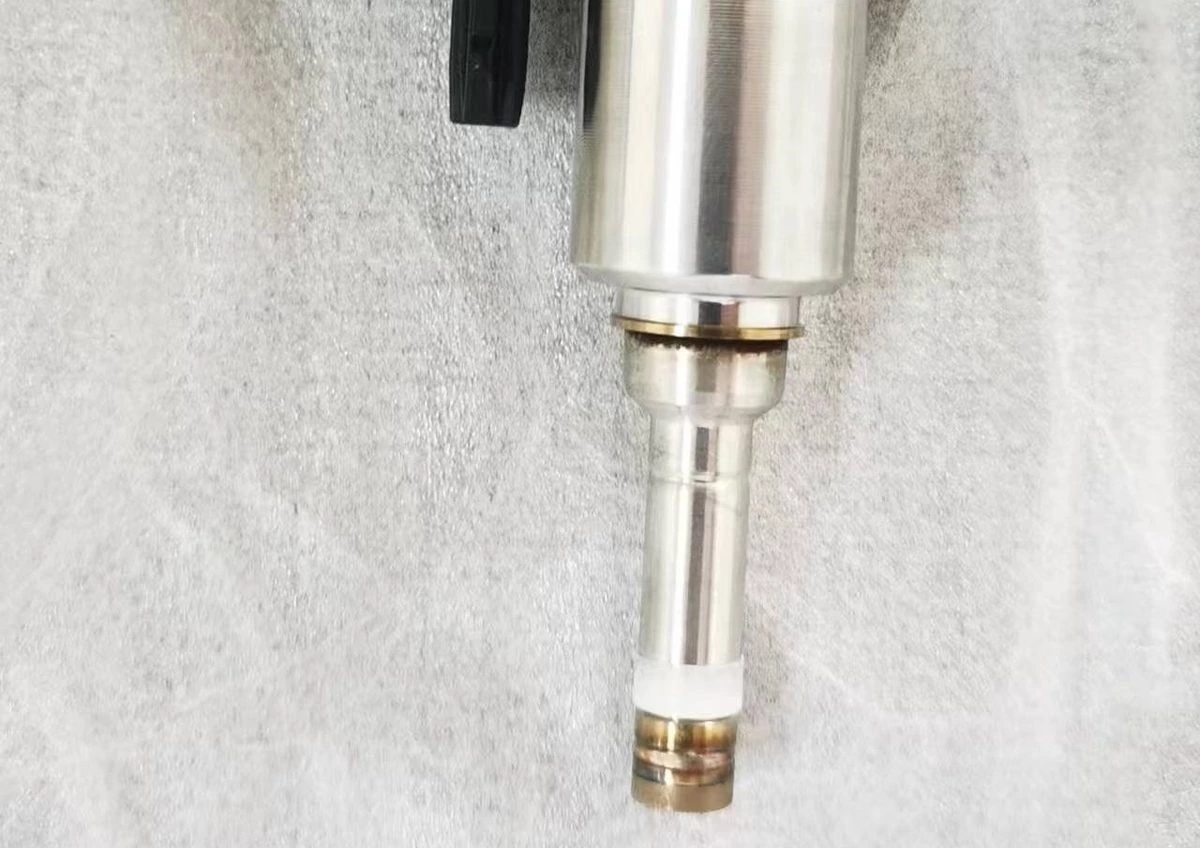
A common rail injector. The number is stamped on the body below the fuel inlet — not on the nozzle nut, which is the most common misreading.
Two habits prevent most of these errors. First, photograph the number instead of transcribing it — characters that look alike (0 and O, 1 and I, 5 and S) account for a surprising share of wrong orders. Second, on a rebuilt or remanufactured unit, check every location: the number on the housing and the number on the ID plate are occasionally different, and the plate is the one that reflects what the unit actually is now.
OEM, OE and Aftermarket Numbers: What's the Difference
These three terms get used loosely, and the confusion causes real ordering errors.
| Term | What it means | Where you see it |
|---|---|---|
| OE number | The original manufacturer's part identifier | Stamped on the part you are replacing |
| OEM part | A part made by or for the original manufacturer, sold under their brand | Dealer channels, original packaging |
| Aftermarket part | A compatible part made by a third party, sold under their own brand | Independent suppliers, usually with a cross-reference list |
An aftermarket supplier publishes a cross-reference: their own part number on one side, the original OE numbers it replaces on the other. That cross-reference is what you match against — not the supplier's internal number, and not a photograph that looks similar.
Matching a Turbocharger OE Number
Turbochargers deserve their own section, because the same housing casting is frequently shared across several part numbers.
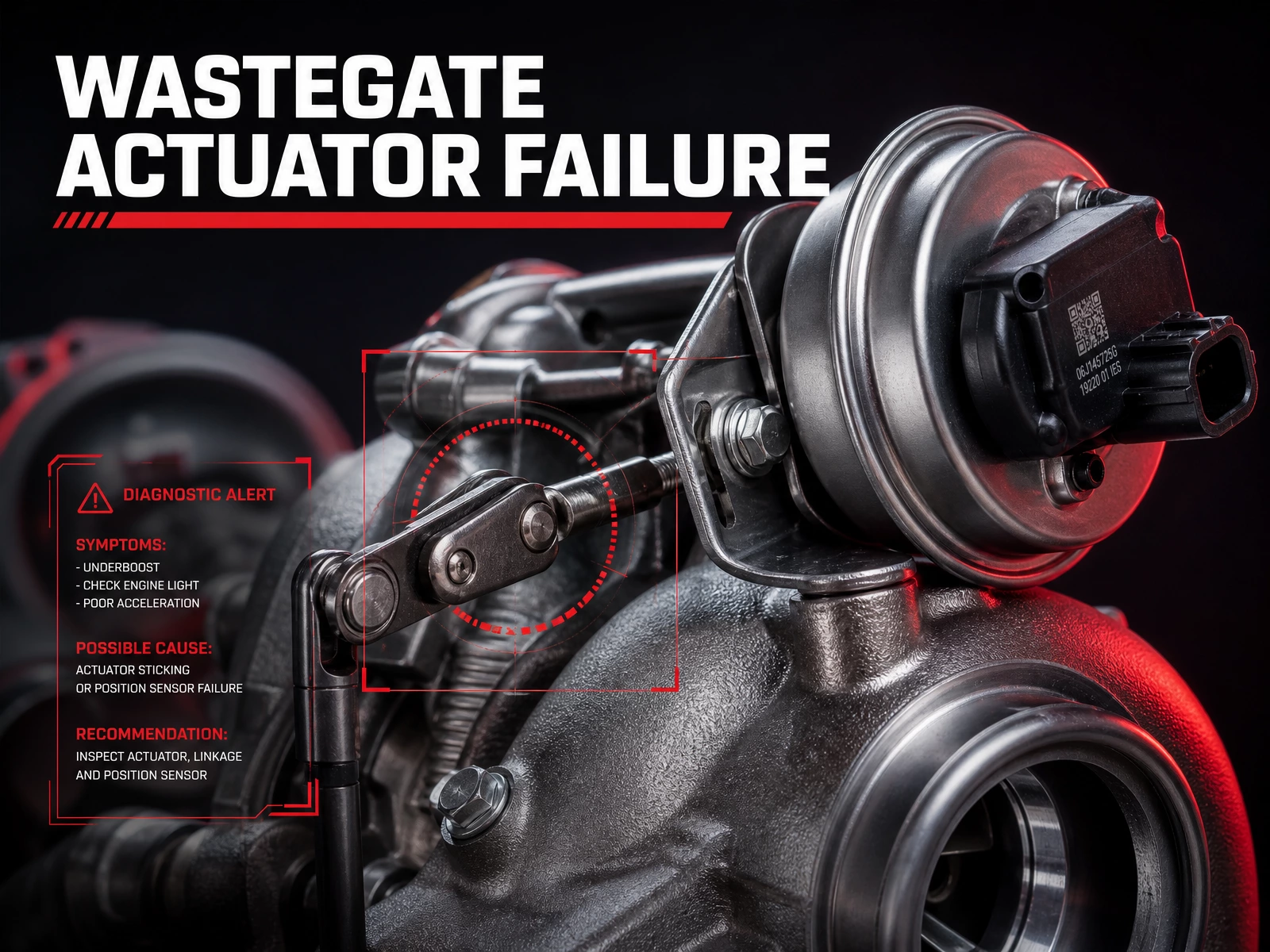
A turbocharger OE number identifies a complete assembly as built for one application. But that assembly may share its compressor housing, turbine housing or CHRA cartridge with units sold under other numbers. Two turbochargers that look identical can therefore carry different numbers — and different boost characteristics, different actuator types, and different turbine trim.
When matching a turbocharger, confirm four things beyond the number itself:
- The engine model and build year the unit came off
- Whether the original was wastegated or variable geometry (VGT)
- The boost pressure the application requires
- Whether the actuator is electronic or pneumatic
If any of those are unclear, send photographs of the identification plate and the actuator together. A supplier who knows the platform can usually identify it from those two images alone.
What to Send Your Supplier
When you are not certain about the number, send enough information for the supplier to work it out. This is the difference between one email and five.
| Send this | Why it matters |
|---|---|
| Photo of the OE number | Removes transcription errors entirely |
| Engine model and serial number | Narrows the variant when one number spans several builds |
| Photo of the whole part | Confirms orientation, port layout and mounting pattern |
| Quantity and destination port | Lets the supplier quote correctly on the first reply |
For a first order, ask for the cross-reference in writing. A supplier who can put their own number and the original OE numbers side by side in an email is one who holds the data — and one you can hold to it if a part does not fit.
The Short Version
Read the number off the part itself, not from a catalogue that may cover several variants. Photograph it. Confirm the engine model. Match against a supplier's written cross-reference rather than a visual comparison. And when in doubt, send more information than you think is necessary — it costs one email, while a wrong order costs a shipment.
Common questions
Where is the OE number on a diesel turbocharger?
Usually on a machined flat pad on the compressor housing. Some units also carry an identification plate riveted to the centre housing. Read both — on rebuilt units they occasionally disagree, and the plate reflects what the unit actually is now.
Is an OE number the same as an OEM part number?
No. An OE number is the identifier the original manufacturer assigns to a part in production. An OEM part is a part made by or for that manufacturer and sold under their brand. Neither term tells you the part is interchangeable with anything else — that has to be confirmed by dimensions and application.
Can I match a part by comparing photos?
Not reliably. Two diesel components can look identical and still carry different numbers, tolerances and ratings. Match against the supplier's written cross-reference, then confirm the engine model and serial range before committing to volume.
What should I send if I do not know the part number?
Four things: a photo of the stamped number, the engine model and serial number, a photo of the whole component, and the quantity and destination port. A supplier who knows the platform can usually identify the part from the first two alone.
Browse by component
- Complete diesel engines and assemblies — for trucks, construction equipment, generators and marine use
- Diesel injectors — common rail, mechanical and unit injectors, with nozzles and seal kits
- Turbochargers — complete units, CHRA cartridges and repair kits
About this guide. Written by the Komotashi technical team from cross-referencing work on Cummins, Caterpillar, Isuzu, Perkins, Deutz, Komatsu and Weichai platforms. Component locations described here reflect the assemblies we handle; where a manufacturer varies the layout, check the service documentation for that engine.